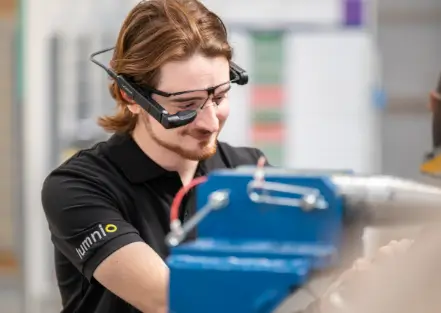
Smart glasses shift everyday tasks from passive screens to context-aware overlays. Their success hinges on robust sensor fusion, edge processing, and see-through displays that reduce cognitive load without distraction. Early gains appear in workflow efficiency and learning environments, yet questions remain about battery life, cost, and privacy. Interoperability and transparent data practices will determine scale across industries. The balance of utility and trust will likely shape adoption trajectories in the near term.
How Smart Glasses Change Everyday Interactions
Smart glasses sit at the intersection of perception and information, translating ambient cues into contextually relevant prompts and overlays. They recalibrate daily routines by aligning notifications with task priorities, reducing friction and cognitive load. Context shifts become seamless as overlays adapt to environments, shaping user perception toward empowerment. As data informs design, interfaces evolve toward unobtrusive guidance, preserving autonomy while enhancing efficiency.
From Screen to Sight: Technologies Driving AR Glasses
From the previous discussion on how smart glasses reshape everyday interactions, the focus shifts to the underlying technologies that enable AR eyewear to render real-time, context-aware visuals. Advanced optics, see-through displays, and sensor fusion enable precise overlays. Edge cases test latency and accuracy, while user experience hinges on seamless calibration, battery resilience, and privacy-aware design for a freer, data-informed future.
Real-World Uses by Industry and Learners
Real-world uses of smart glasses span diverse industries and learning environments, reflecting a pattern of rapid adoption driven by task-specific gains in accuracy, speed, and safety.
Across manufacturing, healthcare, and aviation, data overlays improve workflow efficiency and error reduction, while learners gain hands-on visualization.
Glass ergonomics informs long-term comfort; industry specific outcomes drive measurable productivity and skill advancement.
Weighing Trade-offs: Privacy, Battery, and Adoption Barriers
Given the promise of smart glasses, the key constraints shaping their trajectory are privacy considerations, battery life, and adoption barriers; together, these factors determine practical feasibility and scale.
Observed privacy tradeoffs shape sensor design and regulatory expectations, while battery life pressures ongoing efficiency gains.
Adoption barriers include cost, trust, and interoperability, guiding user-centric standards, transparent data practices, and scalable, privacy-preserving deployment strategies.
See also: The Rise of Smart Infrastructure
Frequently Asked Questions
What Are the Costs to Start Using Smart Glasses?
Initial costs vary, but upfront purchases and ongoing maintenance define the price. Cost considerations include device price, accessories, and app subscriptions; privacy concerns influence value and adoption, shaping long-term budgeting for a freedom-focused, data-aware user base.
How Do Smart Glasses Connect With Other Devices?
Cross device pairing emerges as seamless choreography, with latency optimization guiding handoffs. AR sensor fusion harmonizes inputs, while battery management sustains momentum; the system becomes an autonomous liaison, empowering freedom-seeking users through data-informed, forward-looking connectivity.
Can I Customize AR Experiences for Personal Use?
Yes, users can customize AR experiences for personal use, leveraging SDKs, templates, and scripting to create personal AR experiences. Customization options enable data-driven, forward-looking exploration, appealing to those seeking freedom and individualized interaction with digital environments.
How Secure Are Smart Glasses Against Data Breaches?
In a hypothetical breach, smart glasses reveal privacy risks through synced devices; data control hinges on encryption and access policies. They remain reasonably secure but require rigorous updates, transparent governance, and user empowerment to sustain freedom-aware adoption.
Will Smart Glasses Replace Smartphones Someday?
Will adoption pace suggest smart glasses could supplant smartphones, but not imminently; privacy vs. convenience trade-offs and evolving ecosystems will shape trajectories, with gradual displacement as reliability and autonomy improve and freedom-focused users embrace integrated, hands-free connectivity.
Conclusion
The analysis concludes, with a dry, data-backed humor, that smart glasses will finally replace screens—just not yet, and perhaps not entirely. Irony shadows the promise: context-aware prompts reduce cognitive load, yet battery life and costs still demand a charger and a grant. As interoperability improves and privacy practices mature, adoption accelerates, suggesting a future where see-through overlays become routine aids rather than novelty. In sum, progress persists, even as old frictions stubbornly linger.